
Vergin tutto amor: Translation, Pronunciation, Analysis
Salve, Cantanti.
Let us analyse Vergin tutto amor and look at its Translation, Pronunciation, and Analysis.
Before we begin, this analysis is based on my free booklet you can download here!
A sad devotional text in Vergin tutto amor
A direct plea to the Virgin Mary
This 18th-century devotional aria, traditionally attributed to Durante, is a direct prayer to the Virgin Mary. The singer asks her to hear the voice of the sinner, to be moved by his tears, and to open her heart in compassion. The tone is intimate and imploring, built on repeated invocations of mercy. This is not joyful music. It is a text of suffering, guilt, and supplication.
The singer reduces himself to nothing
One of the most striking details is that the text does not say “listen to my voice”. It says listen to the voice of the sinner. The singer speaks about himself in the third person, as if he were nothing. This creates a feeling of humility and desperation. The character does not even dare to speak directly. This detail changes the entire interpretation.
The structure of the prayer
The text follows a clear structure: invocation, description, and plea. First the Virgin is addressed, then the suffering is described, and finally the request for mercy is made. When the singer understands this structure, the phrasing becomes logical. Without this, the piece easily sounds flat and generic.
Grammar and vocabulary change the meaning
Poetic and old Italian forms
Words like bontà, core, and other poetic forms belong to older Italian. They are common in sacred and operatic texts, but they are not always obvious for modern speakers. These forms are not decorative. Rather, they affect the syllables and the rhythm, and serve to elevate the text. Understanding them helps the singer phrase correctly.
The importance of the subjunctive
Forms like muovano, giungano, and similar verbs are not simple present tense. They are subjunctive forms expressing a wish or a desire. The text does not say “it moves you”. It says “may it move you”. This changes the emotional tone completely. The singer is not describing something. He is begging for it to happen.
Expression must follow the words
The music reflects the suffering
The melody contains many semitones and even an augmented second. These intervals are not random. They create tension and colour. In this kind of music, expressive intervals must stand out. If everything sounds the same, the effect disappears. The contrast makes the emotion stronger.
Do not sing it in a neutral way
Because it is a sacred piece, singers often perform it with a calm and uniform tone. But this text is not calm. It is a desperate prayer. The sound must carry weight, tension, and pain. If the singer does not feel the meaning of the words, the music becomes empty.
Watch the full analysis and study the text seriously here.
This analysis is based on the free booklet below.
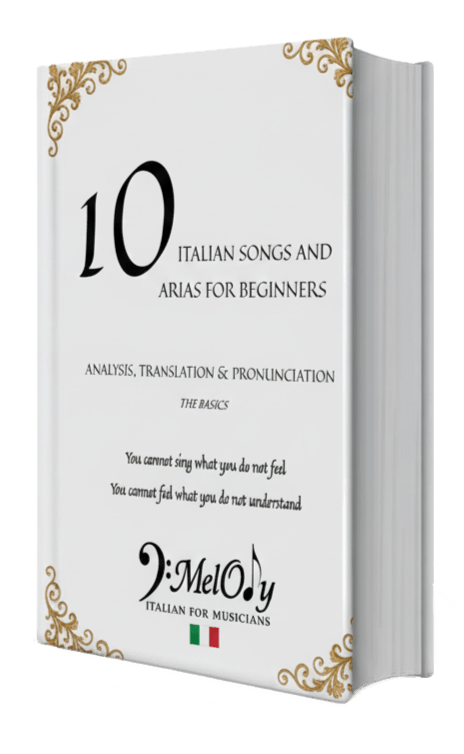
10 Italian Songs and Arias for Beginners
In this booklet, you will learn how Italian actually works when it is sung.
It introduces the foundations of Operatic Italian through 10 of the most famous beginner pieces.
Simple pieces, explained properly.
You cannot sing what you do not feel
You cannot feel what you do not understand
Every phrase you sing has meaning.
Every word has a weight.
When you understand the text, the music becomes alive.
You cannot sing what you do not feel
You cannot feel what you do not understand



Newsletter
Subscribe to receive interesting musical tidbits!
All rights reserved - Odysseas Korellis ©MelOdy