
O cessate di piagarmi: Translation, Pronunciation, Analysis
Salve, Cantanti.
Let us analyse O cessate di piagarmi and look at its Translation, Pronunciation, and Analysis.
Before we begin, this analysis is based on my free booklet you can download here!
A late 17th-century aria of suffering
O cessate di piagarmi: a desperate outcry
This aria comes from Alessandro Scarlatti’s opera Pompeo, but today it is often sung as a standalone piece. The text is a direct outcry addressed to the beloved. The singer begs to stop being wounded and asks to be allowed to die. The language is physical: wounds, coldness, cruelty, torment. Nothing is abstract here.
The text is short, but the pain is repeated
The text itself is very brief, yet performances last several minutes. The reason is repetition. The same words return again and again, like a desperate plea that does not receive an answer. This repetition is not decorative. It shows obsession, exhaustion, and emotional pressure.
A text that must sound as painful as the music
From the very first notes, the music uses semitones and descending intervals that create tension. This is not neutral singing. The words demand weight and intensity. When the text says “stop wounding me” or “leave me to die”, the sound must reflect that. Otherwise the piece loses its meaning.
Grammar and vocabulary
The double meaning of “o”
At the beginning, the word o can be read in two ways.
It can be an exclamation, “Oh, cease wounding me”, or it can mean “or”, as in “either stop wounding me, or let me die”. Both readings are possible, and both are equally painful. This small detail changes the tone of the phrase and shows how important pronunciation and context are.
“Luci” does not mean light here
The word luci literally means lights, but in older and poetic Italian it can mean eyes.
The singer is addressing the beloved directly through the eyes, which is the most intense way of addressing someone. Looking into someone’s eyes is more direct than saying his name. This is why the text sounds so personal and so accusatory.
Accents show the stress
When a word has a written accent on the final syllable in Italian, the stress falls on that syllable.
This is essential for singers, because the musical rhythm often follows the natural stress of the word. Ignoring the accent changes both the pronunciation and the musical line. Understanding these details makes the phrasing clearer and more natural.
Interpretation and expression in Italian singing
The intervals show the emotion
This aria uses semitones and wide descending leaps that create tension and sadness. These intervals are not accidental. They are written to sound painful. When the melody moves in this way, the singer must allow the sound to carry that tension instead of smoothing everything out.
Do not sing the text as if nothing is happening
When the text says “stop wounding me” or “leave me to die”, the line cannot be sung as if it were neutral. Taking time, allowing the phrase to breathe, and giving weight to the words makes the meaning clear. This is not exaggeration. It is simply singing what the text says.
Understanding gives freedom
When the language is clear, the singer does not need to invent expression.
Understanding the grammar, the vocabulary, and the situation allows the interpretation to become natural. What looks like freedom is often just correctness. When the words make sense, the music starts to make sense as well.
Watch the full analysis and study the text seriously here.
This analysis is based on the free booklet below.
Simple pieces, explained properly.
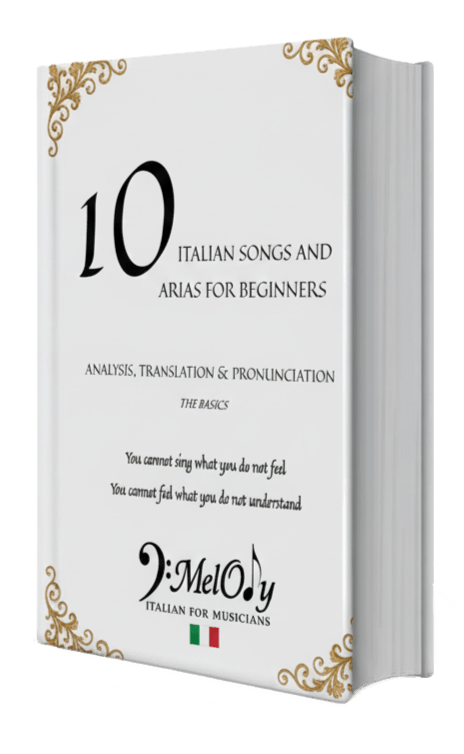
10 Italian Songs and Arias for Beginners
In this booklet, you will learn how Italian actually works when it is sung.
It introduces the foundations of Operatic Italian through 10 of the most famous beginner pieces.
You cannot sing what you do not feel
You cannot feel what you do not understand
Every phrase you sing has meaning.
Every word has a weight.
When you understand the text, the music becomes alive.
You cannot sing what you do not feel
You cannot feel what you do not understand



Newsletter
Subscribe to receive interesting musical tidbits!
All rights reserved - Odysseas Korellis ©MelOdy