
Nel cor più non mi sento: Translation, Pronunciation, Analysis
Salve, Cantanti.
Let us analyse Nel cor più non mi sento and look at its Translation, Pronunciation, and Analysis.
Before we begin, this analysis is based on my free booklet you can download here!
A late 18th-century aria from opera buffa
Playful but full of torment
This piece originates as a duet in Paisiello’s opera La molinara, and was later adapted into the solo version that singers usually study today. The style is comic and lively, but the text speaks about love as a disturbance, something that hurts, provokes, and makes the character lose control.
The heart is no longer calm
The text begins with the line “Nel cor più non mi sento”.
Literally, this means that inside the heart the singer no longer feels himself as before. Youth, calm, and balance are gone, because love has entered. The character complains, but the music makes clear that this complaint is playful rather than tragic.
Love as torment, but also as pleasure
Throughout the text, love is blamed for everything.
Love pinches, provokes, pricks, and chews. These verbs describe physical sensations, but they also show excitement. The character is not truly miserable. He exaggerates, complains, and enjoys the situation at the same time. This contrast is what makes the aria work.
Grammar and vocabulary
Poetic forms
The word cor means heart.
It is a poetic form of cuore, often used in older texts and in opera. These forms are not decorative. They affect the rhythm of the line and the number of syllables, which is why they appear so often in singing.
Words that describe love as a physical force
The verbs in this aria are very concrete.
Love pinches, provokes, pricks, and chews. These are not abstract ideas. They describe physical sensations. The text makes love sound like something that attacks the body, not only the mind. This is why the music feels lively and restless.
Old and literary vocabulary
Some words belong to older or more literary Italian.
For example, forms like cagion for cause, or poetic expressions for mercy and despair, appear frequently in this repertoire. Knowing these forms makes the text easier to understand and prevents the singer from guessing the meaning.
Interpretation and expression in Italian singing
The music cannot sound sad
Even though the text speaks about torment, the music is lively and playful.
This means the singer must show contrast. The character complains, but with energy. He says that love hurts, but the sound must show excitement, not despair.
Funny words must sound fun
Some verbs in this aria have a playful sound.
They are almost exaggerated, and the music follows that exaggeration. Saying them with too much seriousness removes the humour. The singer must allow the words to sound light and expressive.
Understanding creates the right tone
Without understanding the text, the piece can sound either too serious or too superficial.
When the meaning is clear, the balance becomes natural. The character suffers, but he enjoys being in love. The music and the language say the same thing, and the aria becomes convincing.
Watch the full analysis and study the text seriously here.
This analysis is based on the free booklet below.
Simple pieces, explained properly.
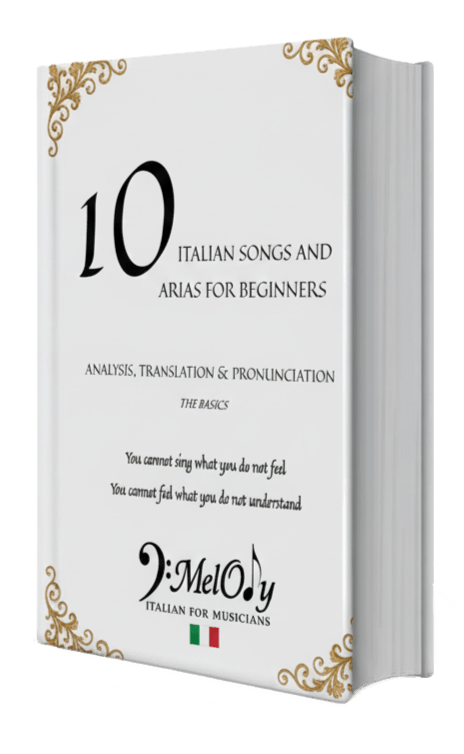
10 Italian Songs and Arias for Beginners
In this booklet, you will learn how Italian actually works when it is sung.
It introduces the foundations of Operatic Italian through 10 of the most famous beginner pieces.
You cannot sing what you do not feel
You cannot feel what you do not understand
Every phrase you sing has meaning.
Every word has a weight.
When you understand the text, the music becomes alive.
You cannot sing what you do not feel
You cannot feel what you do not understand



Newsletter
Subscribe to receive interesting musical tidbits!
All rights reserved - Odysseas Korellis ©MelOdy